

August 24, 2025
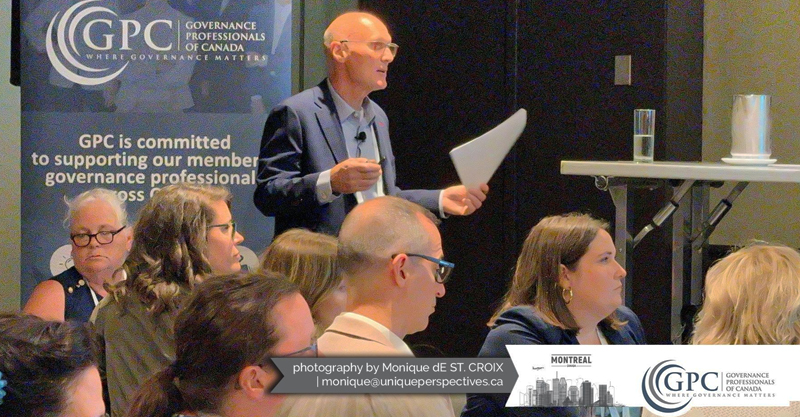
On August 24, 2025, more than 70 GPC.D certified governance professionals gathered in Montreal for a pre-conference workshop titled “Insight and Appreciation.” Hosted by The Planning Group and supported by Governance Professionals of Canada (GPC), the session explored how artificial intelligence (AI) is reshaping board meetings, compliance, and strategic oversight. Facilitated by Peter Wright, Cheyenne Russell, and Patrick Mason, the event offered a deep dive into the practical applications of AI in governance.
A Cross-Sector Gathering of Governance Experts
The session convened alumni of the GPC.D certification program—leaders recognized for their advanced expertise in board governance and strategic advisory. Attendees represented a diverse mix of sectors: Crown corporations (30%), financial institutions and credit unions (25%), municipalities and public sector associations (15%), private industry (15%), education, healthcare, and independent consultancy (5%). This diversity enriched the dialogue, offering a panoramic view of how AI is being adopted across Canada’s governance landscape.
Workshop Goals: Bridging Theory and Practice
The workshop aimed to equip governance professionals with actionable insights into AI adoption. Topics included agentic AI, board engagement tools, privacy and security implications, and real-world use cases. Participants explored how AI can elevate governance tasks, assess organizational AI maturity, and identify practical tools for implementation
Poll Results: AI Adoption Trends Among Governance Professionals
Live polling revealed a nuanced picture of AI integration in governance: Policy Readiness: 44% have a clear AI policy; 36% are developing one. Of those with policies, 86% permit some AI use. Work Quality: 71% said AI has somewhat improved their work; 13% said it has dramatically improved it. Time Efficiency: 65% said AI saves a little time; 33% said it saves a lot. Frequency of Use: 27% use AI daily, 27% multiple times per day, and 39% occasionally. Top Use Cases: Drafting and research led the list, followed by editing, minute-taking, and agenda creation.
Key Themes in AI Governance
Breakout Sessions: Peer Learning and Practical Applications
Two breakout sessions provided space for reflection and forward-looking dialogue:
Participants highlighted several tools actively used in board governance:
Use Cases: How Boards Are Leveraging AI
AI is enhancing governance in areas such as:
Roadmap for Responsible AI Adoption
Governance professionals are encouraged to assess current capabilities, define strategic objectives, form an AI steering committee, and pilot small projects and scale successful ones. Success depends on clean data, secure infrastructure, and clear governance policies.
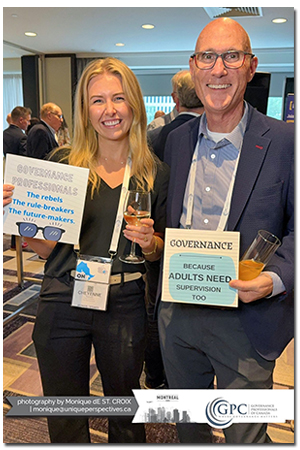
The Montreal session made one thing clear: AI is no longer a future consideration—it is a present-day reality. GPC.D certified professionals are already applying AI to improve the quality, speed, and strategic value of their work. Yet, adoption remains uneven, and policy development is lagging—presenting both a challenge and an opportunity. Governance professionals must lead the way in shaping responsible frameworks for AI use. The risks of inaction—inefficiency, missed insights, reputational stagnation—are just as serious as the risks of use. Boards must be equipped with the right tools, mindset, and governance structures to ensure AI is deployed ethically and effectively. As AI continues to evolve, so too must the governance profession. The GPC.D alumni community is uniquely positioned to guide this transformation, bringing deep expertise and a shared commitment to excellence. The future of governance is not just digital—it is intelligent, adaptive, and ready for what comes next.
Your AI Strategy Readiness Session
Ready to explore how AI can elevate your board’s performance? Book a strategic AI readiness session with our governance experts today. This is not a technical assessment—it’s a strategic conversation focused on your board’s decisions, leadership perspectives on AI, and staff readiness for adoption.
The Planning Group is a management consulting firm, dedicated to helping organizations achieve measurable benefits through the practical application of strategic and operational planning. Since 2002 we have provided business planning consulting expertise, strategic advice, and facilitation to clients in all sectors.
The Planning Group | Management Consulting Firms | Strategy Consulting